
BBQ Sauce Flavor Guide: Picking Between Jim’s Own Six Flavors

Most barbecue decisions happen early: what to cook, what wood, what rub. The sauce decision happens last, usually with the lid open and a line of people holding plates. That is also the decision everyone tastes first, which is why the bottle matters more than its place at the end of the timeline suggests.
We carry six flavors, and they are not six versions of the same thing. Mild, Hot, Honey Mustard, Smokey, Vinegar, and Sticky Q sit in different spots on the American barbecue map, and each one solves a different problem at the grill. The notes below describe the style each flavor name points to. For exact ingredients and heat levels, check the product page for the specific bottle.
Start With the Regional Map, Not the Label
American barbecue sauce splits along regional lines, and those lines explain why one brand would carry six flavors instead of one. Kansas City sauce is defined by sweetness. North Carolina sauce is defined by tartness, built on vinegar, and it packs a real wallop compared with a thick sweet sauce. Mustard-based sauce belongs to the Carolina tradition as well, sharp and yellow rather than red. Memphis is known for sweet. Texas is famous for the opposite approach, often serving barbecue with no sauce at all.
Put those traditions side by side and a pattern shows up. A sauce is doing one of four jobs: adding tang, adding heat, adding smoke, or adding sweetness. The best versions balance all four without any single one taking over, and that balance is what lets a sauce work on ribs, brisket, chicken, or as a finishing dip without rewriting the meat underneath it.
Blind tastings of store-bought sauces tend to judge the same three things: flavor, balance, and versatility. Keep those three words in mind while reading the rest of this guide, because they are a better shopping checklist than any single flavor description.
The Six Flavors and the Job Each One Does
Mild: the bottle that never argues with the table
The mild lane is balanced barbecue. There is enough tang to cut through pork fat and enough sweetness to round off smoke, but nothing that demands attention or forces a second glass of tea. That balance is why a mild sauce works across ribs, brisket, chicken, and pulled pork in the same meal. If you are cooking for a group with mixed tolerance for heat, this is the bottle to buy in quantity and keep on the table.
Hot: heat that rides on top of flavor
A hot barbecue sauce is not a hot sauce in the wing-sauce sense. The heat sits on top of a sweet and tangy base, so the first impression is still barbecue and the burn arrives after. That makes it a good fit for chili dogs, sausage, wings, and sandwiches where you want a little pushback. If someone at your table keeps a bottle of hot sauce next to the salt, this is their bottle.
Honey Mustard: sharp, sweet, and built for pork
Mustard-based barbecue sauce is its own tradition, closest to the Carolina mustard style, and honey mustard adds a rounded sweetness on top of that sharp backbone. The result is a sauce with bite that is not chili heat, which makes it a natural partner for pulled pork, chicken, and sausage. It also works as a dip as well as a glaze, so it earns a spot on a party table next to the chips and the sliced bread.
Smokey: for cooks who need the smoke to show up
Smoke is the hardest flavor to fake and the easiest to lose, especially on a gas grill, in an oven, or on a short cook where the meat never spends long enough over wood. A smokey sauce reinforces what the cooker started. Use it where smoke is the point: brisket, ribs, and any cook where you want the first impression to be the fire rather than the sugar.
Vinegar: the North Carolina lane
Vinegar-based sauce is the tart end of the spectrum, thin and sharp, made to soak into chopped or pulled pork instead of sitting on top of it. North Carolina sauce is all about tartness, and the vinegar is what delivers it. Reach for this bottle when the meat is rich and you want something to cut through it, or when you want a finishing dip that wakes up a heavy plate instead of coating it.
Sticky Q: thick, sweet, and built to stay put
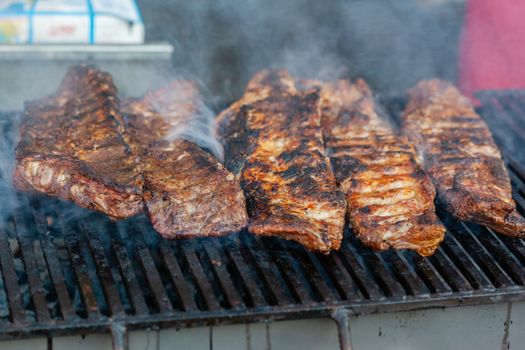
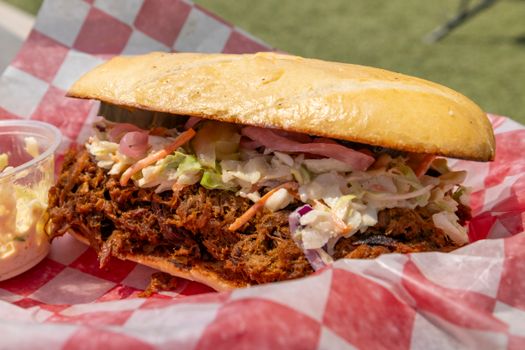
Sticky Q lives in the sweet, thick end of the range, closer to the Kansas City idea of sauce that clings to the meat and caramelizes on the surface. Thick sauces belong at the end of the cook, brushed on for the last few minutes so the sugars glaze without scorching. Ribs and chicken are the obvious targets, and it is also the bottle that makes a sliced sandwich feel like a barbecue sandwich.
A Starting Pairing Map
|
Flavor |
Flavor family |
Start with |
Reach for it when |
|---|---|---|---|
|
Mild |
Balanced, all-purpose |
Ribs, brisket, chicken, pulled pork |
The table has mixed heat tolerance |
|
Hot |
Balanced with heat |
Wings, sausage, chili dogs |
You want a burn after the sweetness |
|
Honey Mustard |
Mustard-based with honey |
Pulled pork, chicken, sausage |
You want sharp and sweet, not smoky |
|
Smokey |
Smoke-forward |
Brisket, ribs |
The cook needs more smoke flavor |
|
Vinegar |
Thin and tangy, Carolina style |
Pulled pork, chopped pork sandwiches |
The meat is rich and needs cutting |
|
Sticky Q |
Thick and sweet |
Glazed ribs, chicken |
You want a glaze that stays put |
Treat the table as a starting point rather than a rule. Sauces are personal, regional loyalties run strong, and the only test that settles the question is the one you run at your own grill with your own rub and your own fire.
Buying for a Crowd Without Buying the Wrong Case
Jim’s Own sells sauces in pints and gallons as well as multi-packs and cases, which splits buyers into two groups: the cook who needs one bottle for Sunday and the cook who needs enough for a crowd. Both should follow the same sequence. Buy small first, taste, then scale up in the size that matches how often you cook.
-
A pint is the taste-test size. It covers several cooks on ribs or chicken and lets you find out whether the flavor matches what you pictured before you commit to volume.
-
A multi-pack is the fastest way to run a side-by-side comparison. Line up two or three flavors on plain grilled chicken and the differences show up in a single bite.
-
A gallon or a case makes sense once you already know which flavor disappears first at your house. Case buyers are usually cooking for events, and the safe play is one all-purpose bottle plus one with more personality.
Build a Two-Bottle Setup Instead of Picking One
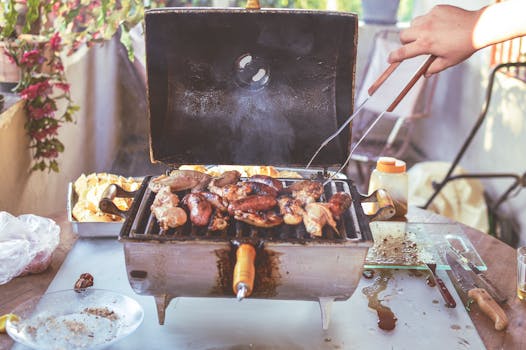
Most experienced cooks stop trying to find a single best sauce and keep two: a base and a finisher. The base is the balanced, all-purpose bottle that goes on everything and suits everyone. The finisher is the one with a point of view, whether that is heat, smoke, honey mustard sharpness, or a thick sticky glaze brushed on at the end.
The setup also depends on what the meat already has on it. Jim’s Own carries rubs in Mild, Smokey, and Texas Steak along with sausage seasonings, and layering matters. A smoke-forward rub plus a smoke-forward sauce doubles down. A smoke-forward rub plus a vinegar sauce keeps the smoke in front and lets the tang do the cutting. Neither is wrong, but knowing which one you are building keeps the plate from tasting flat.
How to Taste Test a Bottle Before You Commit
-
Taste a small amount plain, straight off the spoon. You are checking balance first, because a sauce that is all sugar or all vinegar only gets louder on the grill.
-
Taste it on unseasoned chicken or pork. Sauce behaves differently on plain meat than on a piece that already carries salt and spice.
-
Taste it on meat with your usual rub. This is the combination that actually lands on the plate, and it is where a sauce either fits or fights.
-
Test it as a finishing dip after the meat rests. Tasting panels judge store-bought sauces on flavor, balance, and versatility, and dip is where versatility either shows up or does not.
Mistakes That Make a Good Sauce Taste Wrong
The most common one is brushing a thick sweet sauce on too early. Sugar burns before meat is done, and a glaze applied at the start turns bitter by the end. Sticky sauces and honey mustard belong in the last few minutes of the cook.
The second is treating a thin vinegar sauce like a glaze. It is built to soak in and cut richness, so it works best on pulled or chopped pork and as a finishing dip rather than painted over a rack of ribs. The third is expecting one bottle to cover every cook. If your household eats pulled pork and glazed ribs in the same month, two bottles will serve you better than one compromise.
Frequently Asked Questions
What is the difference between vinegar-based and sweet barbecue sauce?
Vinegar-based sauce is the tart end of the range, associated with North Carolina, where tartness is the defining trait and the vinegar gives the sauce real punch. Sweet sauce belongs to the Kansas City lane, thicker and built around sugar. One cuts through rich pork; the other glazes and caramelizes. Most barbecue regions land somewhere between those two poles.
Which Jim’s Own flavor is best for pulled pork?
Vinegar is the classic pairing for pulled or chopped pork because its tartness soaks in and balances the fat. Honey Mustard is the other strong option, since mustard-based sauce is its own Carolina tradition and the honey rounds off the sharpness. Mild works when you are feeding a crowd with mixed preferences. Check each product page for exact ingredients.
Can I use the same sauce for glazing, dipping, and serving at the table?
Yes, though the timing changes. Thick, sweet sauces like Sticky Q glaze best in the last few minutes so the sugars do not scorch, while thin vinegar sauces work better as a finishing dip or a splash over chopped pork. Balanced flavors such as Mild and Hot are flexible enough to go on during the cook and stay on the table afterward.